Showing posts with label David Garrigues. Show all posts

05 June 2015

Daily Practical Practice

Dashiel Peter says, "Hello out there from bonny Scotland. I'm almost a year old!"
Often I meet people who think the practice of ashtanga vinyasa yoga is a very rigid practice that has many rules. Often they think they have to kill themselves to do it. 

This isn't the case at all. 

Daily ashtanga practice can be done with as much energy as you have to put into it, it doesn't have to be hard all of the time. 

Being a new mother, I find myself happy to get on my mat to practice. I am not concerned which series I do or how "hard" I practice. Just arriving on my mat and moving and breathing every day is more than enough. 

There have been times in my life where practice has been the most important daily routine and I didn't focus on anything else. And there have been other years where I practiced every day with the least amount of effort applied.

Now I find myself in the middle road after swaying to both extremes. I have done bare bones practices for a length of time and I have done full throttle practices every day as well.  

As a new mother, I am tired most days. To manage this and sustain a six day a week committed practice, I make a practical plan. 

I recommend this method for people who are working intensely, and people who are traveling. This would be great for anyone who is having a harder time than usual, dealing with challenges, or even just needing more sleep than anything else.

While we are on retreat, studying directly in India with time off from our jobs and householder commitments, and when we have carved out devoted time in our daily lives to focus just on the practice, we can study as deeply as possible with full intention on practice for hours on end. This is wonderful when this can happen and I fully urge people to dive into their inward journey as much as possible.

Having a practical practice plan balances this intensity, there must be a balance: we can't sustain deep practices over a long period of time. The body needs a break, so does the mind. Note how when practitioners study "in-depth" it isn't every day for an extended amount of time, usually it is no longer than six months.

If one WERE to practice full throttle every day, there is a higher chance of injury, quitting the practice altogether and burnout. This is what we DON'T want to do, we WANT to practice throughout our entire lives, so let's stretch it out over time and with ease.

Chakra Bandhasana with David Garrigues in 2011. One of the very few photos I have of DG assisting me.
Patanjali describes that higher awareness of the self - one of the foundational aims of daily yogic practice - is very near for those who apply themselves intensely (yoga sutra 1.21: "tivrasamveganamasannah"). But it can also come to those who apply themselves with mrdu - mild effort (1.22). 

In sutra 1.22, Patanjali defines three types of yogic efforts that lead one towards understanding samadhi. Practice can be mild, medium or intense; this amount of effort in turn relates to how fast or slow you understand yoga. 

Another way of understanding this is that there may be a few years where you are learning intensely on a regular basis. You are living in the same town with your teacher, you are seeing them daily, or you are on retreat. 

Then there will be a phase where you won't be progressing so quickly. Maybe at this time you won't be learning any new "postures" but you will be finding your own understanding of the practice; here you are learning how to apply what you have been already taught. You begin to use your own language to describe it. It becomes yours. This is where you build your "bhakti muscle" as my friend Tiffany Lee says.

Then the cycle continues: you'll be there for a while until something changes again, you see your teacher and something shifts. You learn the lesson needed to be learned, and you move on. 

This shifting and realigning is natural. Having a few years of enjoying what you have been taught is important to practice. Don't push all of the time. Or are you that type of yogi?

If we follow Patanjali's suggestion in sutra 1.22, we could have three potential practices IF we were to take the middle road.

1. Do an easy practice (a mild practice in time you spend on your mat and in effort). This practice could be twenty minutes to an hour. It is showing up and putting your time in with whatever you have in the tank to do. This could happen once or twice a week depending on how busy you are. For me this happens at least once a week: the standing and finishing asanas only - including savasana. Times that are very challenging this may be your practice - without shame or guilt. Sure it is a short one, but it is still a beautiful one.

2. Do a medium one (medium in length and in effort). This is the practice that Goldilocks would say is, "Juuuuust right". This practice is the one you try to do three to four days per week. This could be the practice you could do without working so hard but one where you have to still have to apply more effort than the first practice. One hour to an hour and a half. This is the meat of your practice - you spend most of your days doing this one - during this practice perhaps you also approach the asana you are currently working on or "stopping" at. Do this 3-4 days.

3. Enjoy a long one (intense and endurance based). This practice is the one you do one or two times per week. It is your big practice, the one that you pull everything from your tank to do. It could be an hour and a half to three hours. How much time do you have to spend on your practice? Could you turn off your phone a little earlier in the morning to make this practice happen more often? Or go to sleep much earlier? This is the practice I try to do twice a week with the goal of doing it three times a week. For some householders with big jobs and morning commitments in the week, this could be on a Saturday or a Sunday.

**

The reason we vary practice is so that we can:

1), focus on the breath and the vinyasa
2), maintain steadiness and consistency in our foundations
3), establish an unwavering commitment to getting on the mat six days a week 
4), enjoy practicing!

**
To Practice

I will practice today because the day is grey
I take practice today because the day is sunny
I completed my practice today because I needed to breathe
I needed to understand myself better

My body says I need to stretch
I need to chill out
I must learn to relax

I practice because no one tells me to
I practice because I feel God watching me 

Often the practice
Smells like the food I ate yesterday
I'm covered in sweat and I am drooling
I try to hold it together
I feel like an elephant
I am heavy
I unravel

Often during the practice
I am floating in the clouds, again with the Lord
My body is light and my mind doesn't fight

The earth enjoys my company
I join the world around me
I am taken care of
I do not have to be afraid
I love myself, my community and the blessed world

I practice because I believe in it
and it believes in me


Utthi Plutthi - one of the gestures you ALWAYS do, the last gesture before taking rest, the gesture that builds bandhas, builds bhakti, builds peace within.


07 November 2012

Welcome to Jeweler's Row, Philadelphia, the home of Ashtanga Yoga School of Philadelphia!


David and I at his annual Britenbush Hotsprings retreat, 2009.
This is my first posting in my new blog; yes, I have jumped on the bandwagon and I feel compelled to share tales within my practice of yoga and of my journey here in Philadelphia!  It is my intention to share with you the exciting practice that I am learning, my favorite teaching stories, and some of my sweetest treasures that I have found.  And there is no better time to share information:  here in Philadelphia at the Ashtanga Yoga School, there is a whole lot of yoga happening and there is much to do to get it spiraling into it's fullest effect!

Joy mopping up the final touches for the opening practice, July 3, 2011.
On July 3, David Garrigues, extraordinary Certified Ashtanga Yoga Teacher, and musician-skate board-rocker, opened the Ashtanga Yoga School of Philadelphia.  This was a soft opening since there weren't any advertisements about the event - the main shala was finished but there was construction going on with the shower, the changing rooms, and within the smaller yoga studio outside of the main shala.  The construction is still going-on now and though the project is coming together slowly, the main shala is in full working form - it is a place of calmness. The shala itself is glorious - there is a radiance that needs no words to describe.  By the grand opening on August 28 (moon day, a Saturday), the Ashtanga Yoga School hopes to have most of it completed and in full function.

The shala is a spacious room on the third floor, with large windows and beautiful natural light.  The building is 175+ years old with crooks and creaks; when you roll your mat out onto the floor, the wood planks below you bend and give.  You feel as though this third floor room has been build for practice.  The colors of the walls are painted a muted- yet-bright orange and blue, and white clean lines perimeter the ceiling and trim.  Sounds from the vibrant city come into the ten-foot-plus floor windows and horns and people are heard from the street.  

My favorite piece to this is that it is located right on Jeweler's Row, what is said to be, 'America's Oldest Diamond District' just blocks from the Liberty Bell and Independence Square.  It makes clear sense to practice yoga in an old and historic place, and even more so, amongst some of the precious stones of the world:  we too are shining ourselves as we practice, peeling away layers to get to the deepest and clearest part for reflection. 

Students practicing in the morning glow.
Mysore classes have been happening daily taught by David G and myself from 6:15-9:15 am.  I have been teaching while he has been away.  Students devotedly practice six days a week, and the shala is filled with willing and enthusiastic practitioners.  

At first, I didn't know what it was going to be like to come into a studio and teach students I had never met before.  But, as practitioners of ashtanga know, the language of ashtanga is unspoken; teachers connect with students via adjustments and students connect with teachers by coming to practice with them.  The practice IS the language!  It is practical to travel around the world or visit an ashtanga yoga shala, roll out your mat and begin practice.  We don't necessarily need language to convey our needs, the practice is the voice. 

The first resolve I must share:  why I chose Philadelphia and to leave the beautiful blue skies and striking mountains of Idaho.  I came to learn the ashtanga third series from David and also to dive into a teaching apprenticeship with him.  I came to teach Mysore while he is away on retreats and workshops and I came to enjoy a new city with a flavorful grit.  Philadelphia is gritty and edgy!  There is nothing tame about Philadelphia - even my friend Kathie Stearns in Boise asked me, "What!  Philly!  Why are you moving to Philly!" 


Back in my days of pink pants: here I am doing a little "Supta Up!" and Marichy C up at Table Rock, in beautiful blue-skied Boise, Idaho. 2008.
The main reason:  the unique teachings of David G.  David always invigorates my practice in new ways that I don't know are possible.  He is methodical, precise, and always pushes my practice in new ways.  During our time together at Britenbush Hotsprings in Oregon,  here is a little story to convey how impactful he has been:

During an afternoon session of pranayama and exploration, David had us practicing Namaskar A and B blindfolded.  I had never been blindfolded during yogic practice.  To me, I thought:

“How ridiculous to let go of your drishti!  What!?”  

Here is me along the banks of the Ganga, from a boat.
Little did I know that I would enjoy this invitation into a deeper inward reflection.  Then, before Led Primary class three days later, there were bandanas in the front of the room.  I have no idea why I chose to pick up one and blindfold myself.  It was through David’s encouragement to enter the unknown, where the endless possibilities happen during practice - if and only if, you research and get out of the box.  What always enfolds is a new way to dive deeper into the practice.  Even with a mysterious tabla player in the room, the practice became intimately joyful and quiet; it was a time of safe and timeless reflection.  I heard the "tic-ca-tica-ca...ta-ca-ca...ta-ca!" and of course, "Ekam...Dve....Trini!..." but mostly, I was carried to the banks of the Ganga where I was at the end of my trip to India in 2008, right there on the banks of the mighty Benares!  I was transported to this divine place of memory where all time and place left my mind, and I felt yoga, only yoga. 

Some of the mystery and intrigue of the goddess River Ganga.

Through practicing with David, I continue to get inspired to try something new, to expand my ideas of an asana, or to devote my meditations on the divine.  For his unique gift to teach me these things, I am always grateful.

Besides learning the third series from David, I assist him during Sunday Mysore classes from 9-11 am.  This is by far one of the highlights of my week:  I watch closely just how and why he adjusts someone.  Assisting underneath someone is a true art - you must be quiet at all times, you must be watching who he has helped and why, and I also am constantly panning the room to where I can be of assistance to the student, and to the greater whole of the group.  This also translates to a deeper understanding of my own practice under David.  I am diving into my practice in ways I haven't gone in a long time: 

Me:  I have lowered have way down in Karandavasana and then brought myself back up.  I am not sure I have another go.  I am doing all of second series, then the third series.  I know I also have to go into backbending too.  I know he will want to do it with me a few more times.  I don't know if I have more tries to give!

David:  "Sarah, let's do that one again."  Of course I do it another three or four times.

In non-yoga terms:  my practice is long, arduous, daily, and with very little room for distraction.  I was sharing with my friend, Maria, that it is just as though we were in Mysore; every day you get up to give every part of your being to the practice, and the rest of the day trying to remember it.  With my dog walking job (newly acquired - The Monster Minders - such badass dog walkers!) I am a little tired at the end of the day, but my mind is fixed on the morning's practice and meditation.  This is one of the reasons that we practice during this golden hour so early in the morning -  to place the stamp of inner reflection upon our day, early enough into the day, so that it can be remembered and captured the rest of the day.  If we do this, and do this continually with a steady rhythm and discipline - this is what allows us to find ease, calmness and and good temperament in the face of any interaction.  These are good things to have when you are living in a gritty city with angry taxi drivers, or working full-time, or being a parent, or having a difficult decision to make.  All of these obstacles and hardships make the reason to practice more and more inviting.  We don't stop our practice when things get difficult, we make more time for it.  The practice teaches how to tap in.

Also in this first post, I want to share with my new friends in Philadelphia pictures of some of my other teachers (besides David) who have taught me how to teach, how to practice, and how to love myself.  The art of adjusting is a pillar for our role as teachers.  Guruji taught many people without the use of his voice, he mostly taught the practice through his hands.  And to learn how to assist others in a posture that they are learning through the guidance of your hands is a true gift.  Nancy Gilgoff and Christine Hoar have taught me, and now David is teaching me.  (A great way to show this is in old videos of Guruji:  check out the video:  nowhere in this video is Guruji saying anything to distract the yogis.)


This is so important when most of us rely on a memory of a posture that we were put into or helped getting into in order for us to replicate it ourselves when our teacher is not with us.  I have also studied with Tim Miller and Sharath Ragaswami and of course with Guruji when I went to Mysore in 2008 and traveled to New York for the practices with Guruji in 2002, but it is these people here who I have spent hours and hours with, and they in return have placed a yogic imprint upon me from their touch.

Here are photos of Nancy Gilgoff and Christine Hoar who have taught me the art of adjusting.  Randa Chehab is also included here, the one who taught me how to commit to practicing at 5 am, who is also one of my first teachers.  Through their tutelage, I am grateful for the ability to teach you all here in Philadelphia. 

Here is Christine Hoar, Authorized Teacher, dear friend and incredible Ayurvedic practitioner.  In this picture, Gracie is missing.  Gracie is her dog.  2008.  Find out about Christine at Bristol Yoga

A pillar of knowledge and joy; Certified teacher, Nancy Gilgoff.  I am always grateful for her knowledgeable adjustments and touch!  Nancy can be found at House of Yoga and Zen
Here is newly-Authorized teacher, Randa Chehab, Certified teacher, Lino Miele and I; Guruji too in the background at Lino's workshop in Bozeman, MT, 2008. Randa is at Down to Earth Yoga
Lastly, I end my first blog post with a shout out to all the Idaho ashtangis out there.  Practicing alongside you, teaching you, and getting to know you all has been such a wonderful experience!  I am thinking of you all as I am out here in this big city - and very much hope you are all practicing together and not skipping your vinyasas.  :)  Jen Boyd, I hope you are using that altar for your backbends!  

Here we all are at the old Ashtanga Yoga Boise shala, doing our Mysore thing, rock'in it.
 

26 April 2012

The Pressure Cooker of Third Series

This post comes directly from a journal entry that I wrote after practicing the third series under the guidance of David Garrigues at AYS Philadelphia.

This particular excerpt is after a Wednesday practice, the fourth day of practicing in a row. Wednesdays are often my most challenging practices. When David is home I practice under him alongside the other students in the room. When he is on the road, I teach at the shala and often do my third series at my home with Lexter the Cat (if I am lucky and he is visiting me). 

Lexter the Cat says, "Yoga...yoga everywhere!"

This is my first post about practicing the third series and sheds light to the gifted teachings of David Garrigues.

Today during my practice, I felt an intense pressure in the room. It was coming from everyone - the students, David, and myself. It was seismic. The pressure for me was mostly in my spine, moving through my pelvis and throughout my body. This pressure can be best described as warm, fluid, awakened, and alert.


David was scurrying around - talking to people, walking to and from one person to the next - in constant teaching mode. Like a child at Christmas, his energy was of pure excitement with what we were all doing.  What I witnessed today was just as he described Guruji doing; David told me once, "The room was never quiet when Guruji taught!"

I met David in 2007 at a workshop when he came to Boise. We always kept in touch and I was always fond of his teachings and his maverick approach on practice. Before moving to Philadelphia in July of last year, I had only studied with David during workshops. The intensity he shares during his workshops is the same energy he shares while teaching at the school here in Philly: he is always in workshop mode - even at home. 

It is easy to feel the energy of the shala that develops from others' and my own practice as we do our daily practice together. The room is heated, windows shut; outside noises from three stories below at the street are bustling from horns, people scurrying to work and commuting and an occasional loud truck or a sound that only you would hear in a vibrant city like Philadelphia. The sounds inside are much more subtle: focused and intense, talking is limited but when there is language it is sincere and laughable. This is the highlight of being able to practice at a shala with others and with the guidance of a trained teacher - there is an intensity that is coming from you the practitioner, the teacher, and others as well.


David sends us to the edge every single practice. And some of us - send ourselves to our edge during every practice. For me I find I can do this at the shala and at home. Often Lexter the Cat watches me do my third series practice at home - he is usually curious and often joins the show and gets interested, especially when I am in Shalabhasana!

The other day while David and I were working on drop-backs, I went into a bounded backbend higher than ever. The flexion in my spine was mind-blowing and I had a surprisingly strong sense of ease since I felt as though I was skiing.

Yes you read that right, skiing.

To look at my feet in a planted hip-width position and being grounded and solid, I felt as though the same principles of skiing applied to advanced backbending. There was a foundational and solid earthly connection - having my feet (or imaginary boots) firmly planted I am able to fully move the spine in any direction because of it. Add to this, we then heat our bodies often enough that they become maleable - strong and flexible - so much so, like reeds or a bendable piece of wood or grass, we move easily once the channels are open.

We also begin to remember times and experiences from a former time in our lives when we were young, when we were happier, when we were sadder, or when we were at a place of peace. Here we can look through the watcher's eye and see ourselves as it was without emotional attachment; this is what Tim Miller calls being the "looking bird".

During this backbend, I was taken back to a time where I was most confident, most strong, most courageous. This was when I was a teenager and ski racing. 

Moments likes these are like weapons to combat the kleshas and the disturbances! Fear, instability, and of course lack of self worth...these are what hold us back from being able to reflect, see our true selves, go deeper, and be more observant. (You can find details about these here - sutras 1.30 and 11.3.)

I do not fully understand what is happening yet in my body as the surges of sensations come and go. I tell people that I am at a beginner's point in my practice and in my life. Every day the third series gets easier yet some days it is so challenging, that I find myself stalling to start the series staying in Parvritta Trikonasana (revolved triangle) for twenty breaths. "Not yet! Stay here!" 

One way I become more connected to myself before I begin the third series is that I always do five Namaskar A's and five or even sometimes, seven B's. I want to be solid in these nine and seventeen movements so that I am stable and confident in my breath and in my spine. These foundational places set the tone for everything that happens later in the practice to unfold in the correct way. Especially upward dog - working this asana alone will carve out a pathway into the backbending universe that is tangible.

Ask me in three years and I will maybe be able to share more about this practice. Right now it is all about getting to know it. With this said, I hope Lexter the Cat isn't jealous since I call my third series practice my new "bestie".

The pressure cooker will happen whether you are practicing primary, intermediate or third series. It is the intensity and wisdom YOU put in your practice every day, it isn't what you are practicing. It is an intimacy between you and the practice and how you are doing it, and with what type of intention. 

If you want to join a shala and bring your practice to another level, of course practicing at a shala will automatically offer this to you: the electricity of a gifted teacher like David, the students who will practice around you, and the lineage seeping into your being, will make your journey easier. 

Yet do not rely on any of these alone. You must find a way to seek practice for yourself and be able to create your own pressure cooker. If you can and have this type of bhakti for practice, you are bound to have a healthy practice that will sustain you for years and years - and you too will cook your way into greater self reflection.  


You may even have unusual epiphanies like mine and think your backbend is just like skiing.

Practicing with a gifted teacher like David is fully worth your time and energy. This summer, David will be teaching for the summer here at home in Philly. To study with him and find out more about what he can teach you about yoga, click here to learn about Davidji.

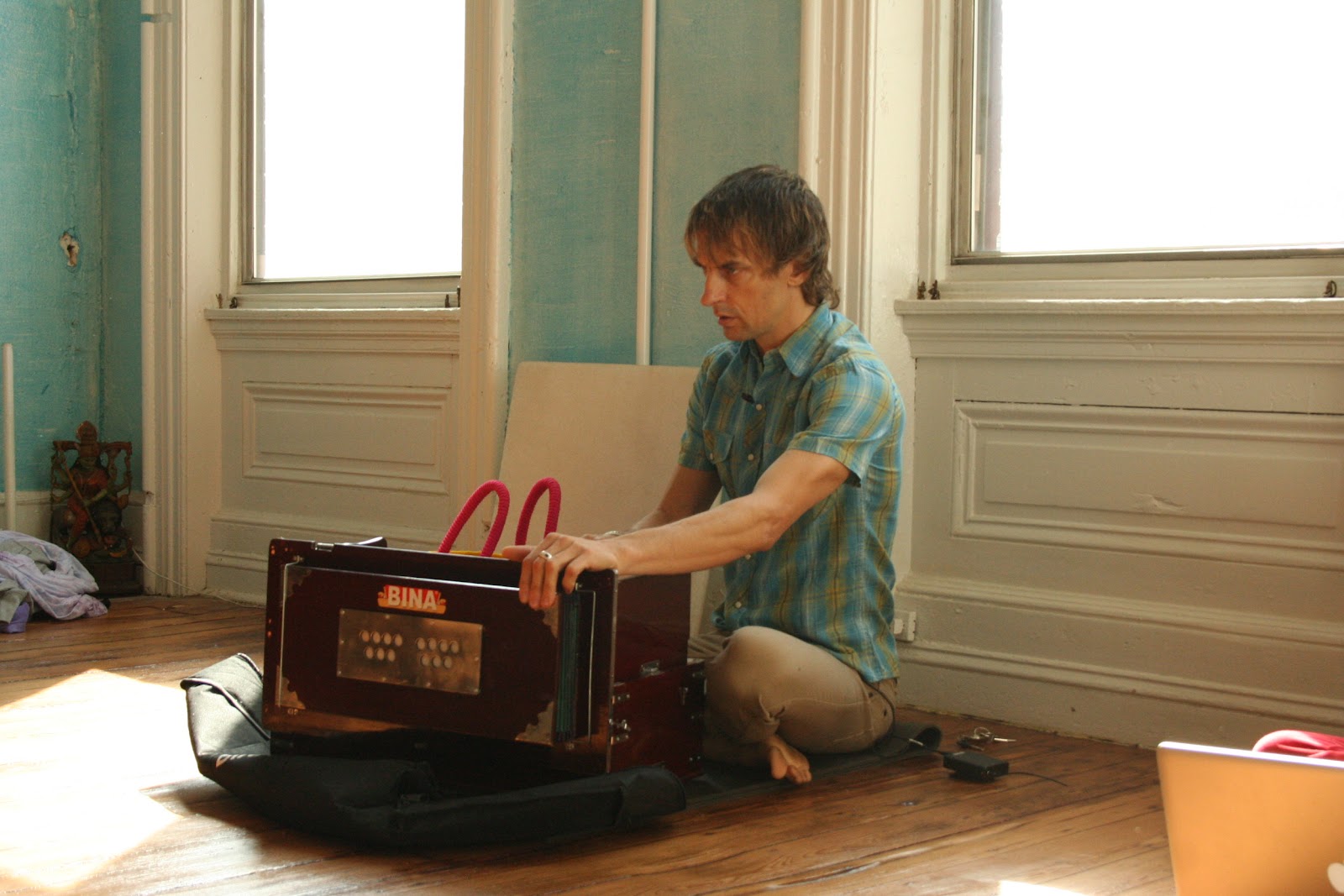
Here's David, getting ready for a Sunday talk and a KIRTAN!